
Why Pasco Cloud?
 Nigel 25 Mar 2026 4 min read
The industry has a software problem!
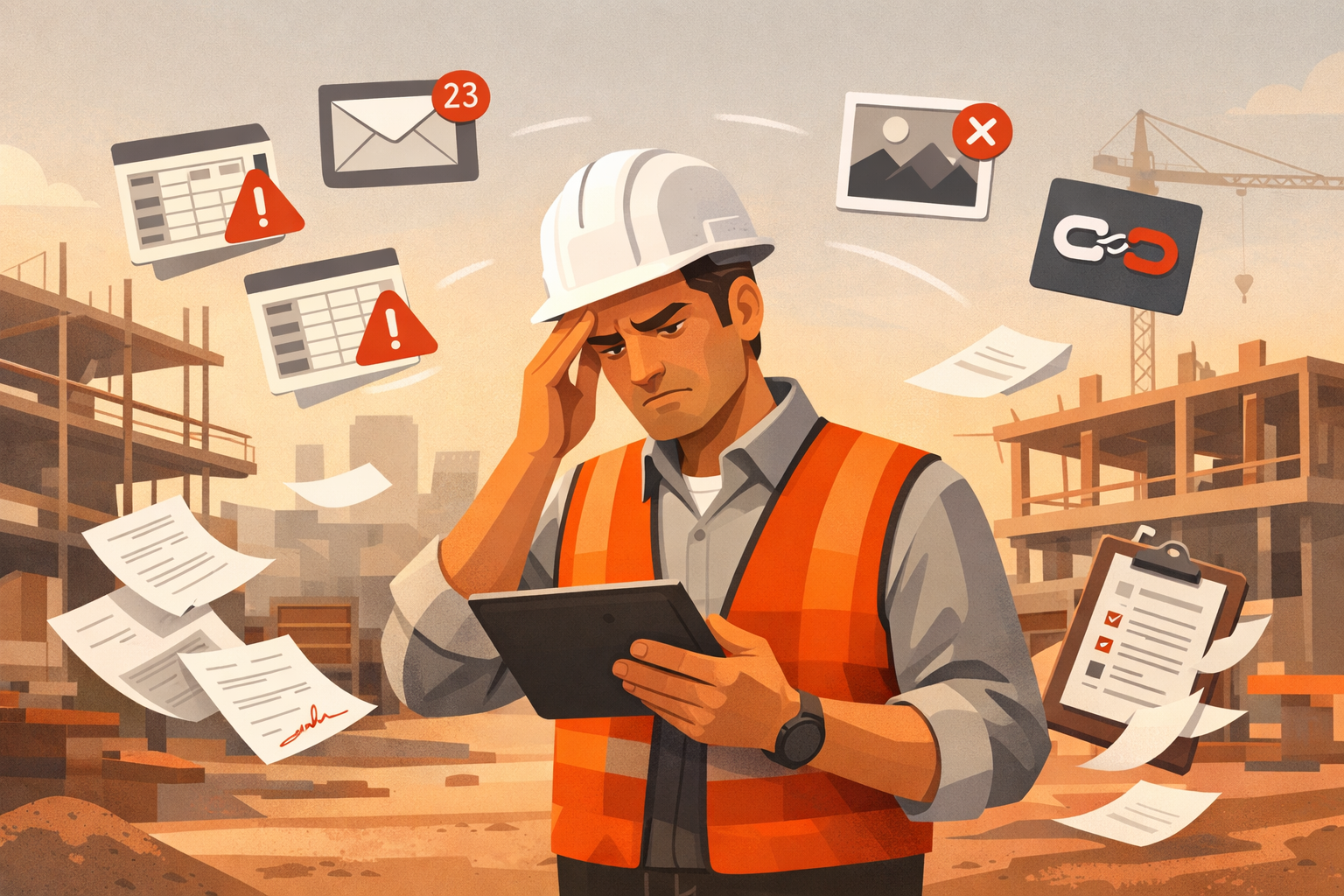
Let's be honest. Most construction teams are held together by spreadsheets, email chains, and someone's phone camera roll.
It's not because people don't want better tools. It's because the tools on offer weren't built for construction. They were built for software teams, marketing departments, and corporate offices — then repackaged with a hard hat on the landing page.
If you've ever tried to run a construction project through one of the big project management platforms, you know exactly what I mean. Fifty features you'll never touch. A pricing model that punishes you for adding subcontractors. And a mobile app that feels like an afterthought.
What's actually broken
The tools are too complex. A site supervisor shouldn't need a training course to log a defect. When your software requires a dedicated admin just to keep it running, something has gone wrong.
Mobile is an afterthought. Construction happens on site, not at a desk. Yet most platforms are designed for desktop first, with a stripped-down mobile app bolted on later. Try filling out an inspection form on a phone with most of these tools. You'll give up and go back to paper.
Collaboration is expensive. Per-seat licensing sounds reasonable until you need to include the subbies, the council inspector, and the client. Suddenly you're paying for thirty seats when only five people use it daily. So you gate access, and the whole point of a shared platform collapses.
They don't understand construction workflows. Approval chains, document numbering, inspection templates, defect tracking with photos and markup — these aren't niche requirements. They're the core of how construction projects are managed. But the big platforms treat them as edge cases, buried under layers of "customisation" that you have to configure yourself.
Data lives in silos. Your reports in one system. Your issues in another. Photos on someone's phone. Meeting notes in an email thread. Tasks on a whiteboard. Nothing talks to anything else, and when something goes wrong, nobody can find the paper trail.
What we built instead
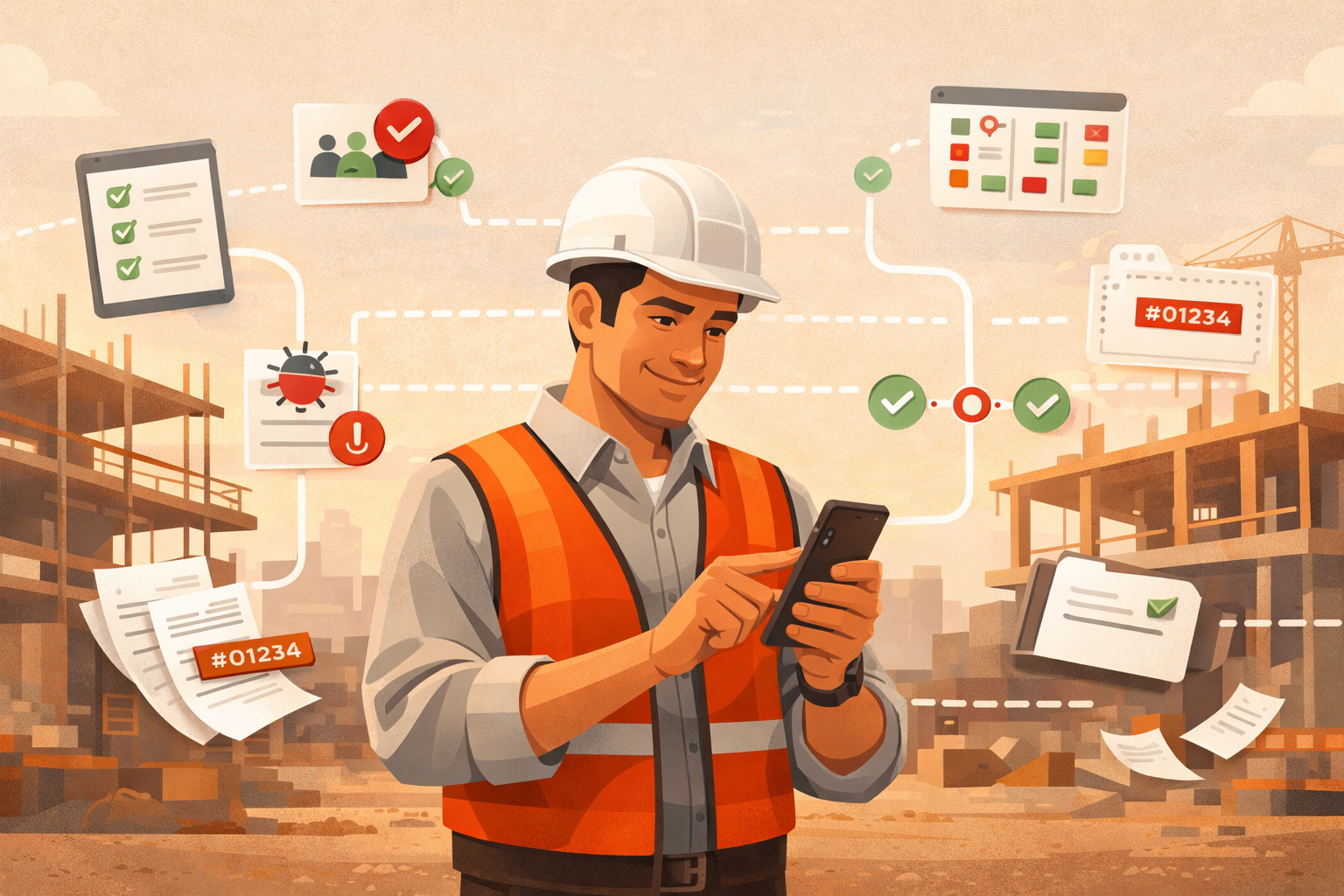 Pasco Cloud exists because we got tired of working around tools that weren't designed for us.
It's a construction management platform built specifically for the AU/NZ industry — for councils, contractors, subcontractors, and suppliers who need to work together without fighting their software.
Templates that match how you work. Build inspection templates with exactly the fields you need — text, numbers, photos, signatures, GPS coordinates, dropdowns, checkboxes. Drag and drop. No code, no configuration consultants.
Reports with real workflows. Submit an inspection report and it flows through an approval chain — sequential steps, designated approvers, rejection and resubmission. Proper document numbering that your QA team will actually trust.
Issues that don't get lost. Log a defect with photos, annotate images to circle the problem, assign it, track it through to resolution. Full audit trail. No more "I sent you an email about that three weeks ago."
Tasks and contracts in the same place. Kanban boards for task management. Contract tracking linked to projects. Everything connected, nothing floating in a separate system.
Built for phones. Not adapted for phones — built for them. The mobile app does everything the web app does, because that's where the real work happens.
Sharing that makes sense. Group-based visibility means you control exactly who sees what. Share a template with your site team. Keep the client on a need-to-know basis. No more all-or-nothing access.
Built here, for here
 Pasco Cloud isn't a Silicon Valley product adapted for the Australian market. It's built in Australia, for Australian and New Zealand construction. ABN verification for organisations. Workflows that match local industry practices. A team that understands what a variation is, what a defect notice looks like, and why your council inspector needs access but shouldn't see everything.
We're in beta right now, and we're building in the open. If you're tired of making do with tools that weren't made for you, come take a look.
The industry deserves better software. We're building it.